
True French Lace & Statement Edges: The 2026 Veil Trends Boutiques Need to Stock
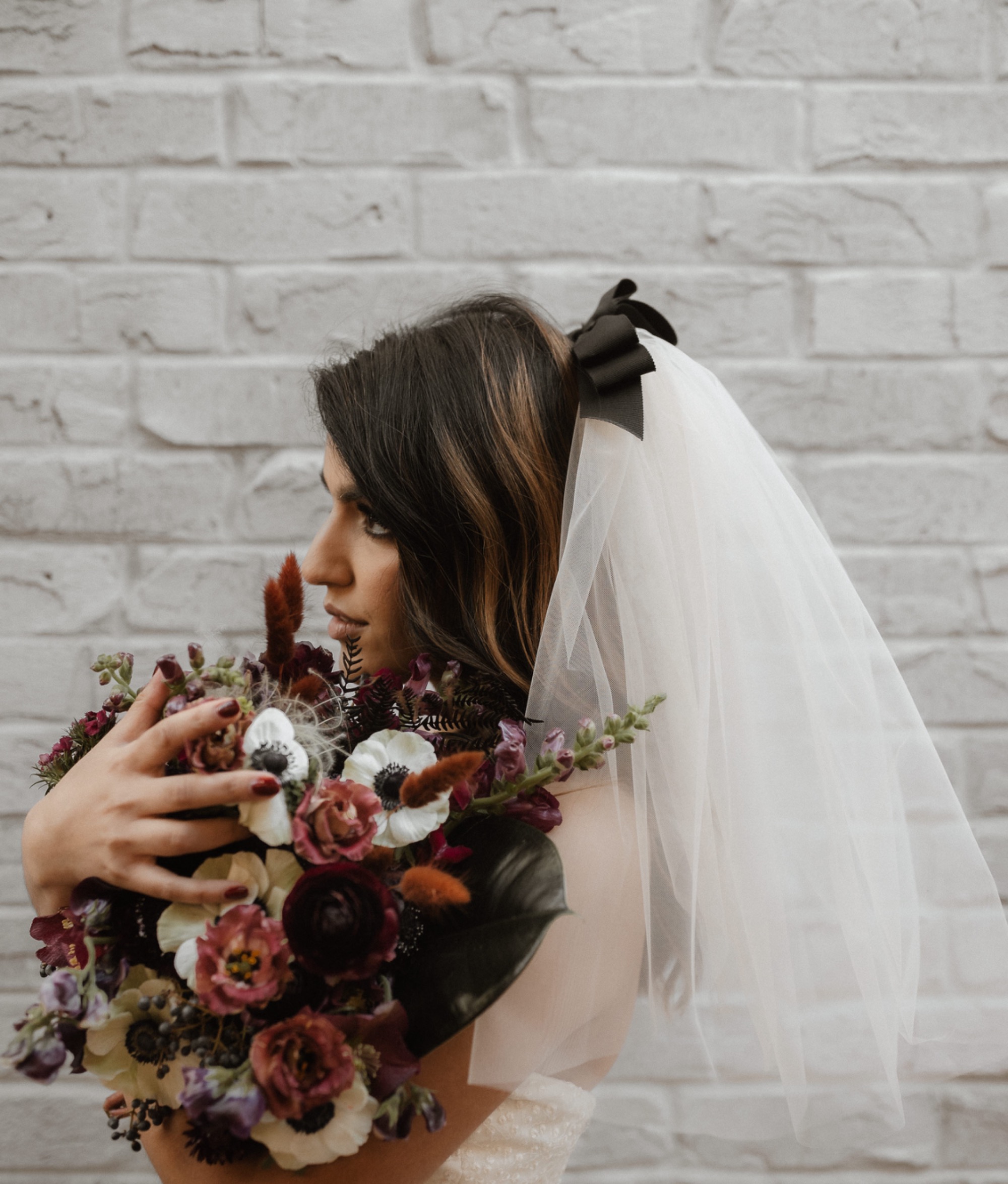

Veils have quietly become one of the most important purchase decisions in a bridal boutique. Brides aren't grabbing whatever matches, they're asking specific questions about lace origin and edge finish before they buy. Two trends are driving nearly every one of those conversations right now: true French lace and statement edging. Here's what boutiques should know about both.
TREND ONE
French Laces Are Back in Demand
Brides are asking for lace by name, and they can tell the difference. True French Alençon and Chantilly lace have become the standard brides compare everything else against, prized for their fine handwork, dimensional texture, and the way they catch light in photos.


What's the difference between Alençon and Chantilly lace? Alençon lace features raised, corded motifs outlined against a sheer net background, giving it a dimensional, almost embroidered look. Chantilly lace is flatter and more delicate, with fine floral or scroll patterns and a scalloped edge that reads as softer and more romantic. Both are made using techniques and machines true to the French lace-making traditions, which is exactly why brides seek out the "true French" distinction — it signals quality and authenticity, not just a lace pattern.
Why it matters for boutiques: True French lace veils sit at a higher price point than synthetic lace alternatives, and they're a meaningful addition alongside a gown; especially gowns with minimal lace detail of their own, where the veil becomes the statement piece. Stocking a few true French lace options gives your sales team a natural way to offer an heirloom that will be cherished for generations.
TREND TWO
Edged Veils Are Everything Right Now
If lace is the fabric conversation, edging is the finishing conversation, and right now, edged finishing might matter to brides even more than the veil's overall silhouette. Corded, Mokuba ribbon, and horsehair braid edges are the three finishes showing up again and again.
Corded edge uses a thin, raised cord (often referred to as soutache) stitched along the veil's border, giving it definition and structure without adding bulk. It reads as clean and modern, and pairs especially well with minimalist or modern gowns.
Mokuba ribbon edge uses fine Japanese silk ribbon along the border for a delicate, refined finish. It's become a favorite for brides who want something that feels elevated and a little bolder compared to a standard raw or corded edge.
Horsehair braid adds architectural drape and structured body along the edge, creating dramatic rolling waves and fluid movement as the bride walks. It's a striking choice for brides seeking modern volume and clean, sculpted impact without relying on heavy embellishments.


Why it matters for boutiques: Edged finishing is quickly becoming a filtering question brides ask before they even try veils on — which means it's worth training staff to lead with it, and worth stocking a range of edge finishes rather than defaulting to one.
Quick Recap
True French Alençon lace: dimensional, corded motifs — reads as heirloom and premium
True French Chantilly lace: flat, delicate florals — reads as soft and romantic
Corded edge: clean, modern, structured
Mokuba ribbon edge: refined, delicate, elevated
Horsehair braid edge: architectural drape, structured waves, fluid movement
Stocking across these lace and edge combinations gives boutiques the range to match nearly any bride's gown and aesthetic — without overstocking a single look.
See the full veil collection or request a line sheet to bring these into your store this season.
Comments